This issue includes updates from region pillar chairs, an emotional message from a Soroptimist in the Ukraine and much more!
 Soroptimist International Western Canada Region
This issue includes updates from region pillar chairs, an emotional message from a Soroptimist in the Ukraine and much more!
Submitted by Sherri Smith, SI Central Alberta
International Women’s Day is a global day celebrating the social, economic, cultural and political achievements of women. The day also marks a call to action for accelerating gender parity.
Marked annually on March 8th, International Women’s Day (IWD) is one of the most important days of the year to:
celebrate women’s achievements
raise awareness about women’s equality
lobby for accelerated gender parity
fundraise for female-focused charities
According to the United Nations, International Women’s Day started in America in 1909, when the Socialist Party of America took to the streets to honor garment workers who had protested against inhumane working conditions the year before. They called it National Women’s Day, and it took place on February 28.
The first International Women’s Day was observed on March 19, 1911 in Austria, Denmark, Germany and Switzerland. That day, more than one million women and men showed their support by participating in public events. In the years that followed, other countries began to observe and celebrate this day.
The United Nations recognized 1975 as International Women’s Year and began celebrating IWD on March 8, later adopting a resolution designating March 8 as International Women’s Day.
IWD is an official holiday in 27 countries around the world, and in China, Madagascar and Nepal the holiday is for women only!
International Women’s Day is not country, group, nor organization specific. No one government, NGO, charity, corporation, academic institution, women’s network, or media hub is solely responsible for International Women’s Day. The day belongs to all groups collectively everywhere.
The campaign theme for International Women’s Day 2022 is #BreaktheBias

Strike the IWD #BreakTheBias pose
Imagine a gender equal world…
A world free of bias, stereotypes, and discrimination.
A world that is diverse, equitable, and inclusive.
A world where difference is valued and celebrated.
Together we can forge women’s equality.
Collectively we can all #BreakTheBias
Whether deliberate or unconscious, bias makes it difficult for women to move ahead. Knowing that bias exists isn’t enough, action is needed to level the playing field.
Will you actively call out gender bias, discrimination and stereotyping each time you see it?
Do we still need an International Women’s Day?
Yes! There’s no place for complacency. According to the World Economic Forum, sadly none of us will see gender parity in our lifetimes, and nor likely will many of our children. Gender parity will not be attained for almost a century.
There’s urgent work to do – and we can all play a part.
#BreakTheBias #IWD2022 #SICentralAlberta #WomensEquality
Submitted by Belle Auld, SI of Calgary
Four years ago Soroptimist International of Calgary (SIOC) decided to follow up with former Live Your Dream award winners. Instead of simply giving them their cash award and saying, ‘bye, bye’, we wanted to see how they were doing: to celebrate their successes with them and offer additional support and mentoring where needed.
At about the same time we decided to create the Dare to Dream (D2D) award to support single women who were struggling to return to school.
SIOC has been able to provide a bit of additional financial assistance to some Alumni members to help them continue their education. Since the beginning of the pandemic we have been offering all Alumni who want them, monthly ‘Good Food Boxes’ (a program through Calgary Community Kitchens that provides 20 – 25 pounds of fresh fruits and vegetables at cost).
Some of the people SIOC supports through the Alumni program:
Mizze Walker received the Dare to Dream award in 2019. She works at the Drop In Centre and is in her final year at Bow Valley College studying for a diploma in Community Services, Addiction Studies with an Aboriginal focus. She says, “I come from Mi’Kmaw ancestry and will be the first person in my blood line to complete post-secondary education”. Despite her own challenges before and during the pandemic, Mizze likes to share the meals she makes from the Good Food Box with neighbors and people who are homeless. “I make soup or chili and take some around near where I live to give to people who don’t always have the opportunity to have a warm meal,” she says.
Jessica Tailfeathers says the LYD alumni program is special. “Meeting other women going through exactly what I’m going through. Women trying to support their family while trying to better themselves. Others who know what it’s like to not have food, clothing, shelter.” Jessica says that being “connected to people who are doing good, inspires me to do good.”
Jessica had just overcome a number of challenges in her life and was working full time and enrolled at Mount Royal University in Journalism, when she found out she was pregnant. She changed her goal – from wanting to be a travel journalist, to wanting to work in the communications field. That would provide more security and stability to her and her daughter. She says of the changes in her life since her daughter was born, “what started as a challenge turned out to be a journey and a beautiful one” and remembers holding her degree in one hand and her daughter in the other.
Amanda Thompson is the single mom of a daughter who has medical challenges plus learning disabilities. She has been juggling school and work with her daughter’s numerous hospitalizations. She appreciates the “care people continue to show to me and my daughter.” Amanda wants to work in non-profit either in a women’s shelter or a program that helps Indigenous people. People “who have faced adversity and challenges and are pulling through.”
Marie Constant says, it was “uplifting” to know that someone she hadn’t even met believed in her. She remembers being “really inspired at awards night. People shared their stories/their passion for helping other women. When I feel unworthy, I remember those women. I hope to be able to do that one day.” Marie’s story is somewhat unusual in that she has been guardian to her younger brother since he was 11 and she was 21. Marie also tries to be a good support for two other siblings, “while taking care of myself too.” Her older sister is blind and has other disabilities. Marie wants to be a nurse to be of service to women and children. She wants to use her teaching and nursing degrees (she already has a teaching degree) to do mission work. She says “I want to share whatever light I have in myself with whoever is in my community.”
#SIofCalgary #Dare2Dream #LiveYourDream #EducatetoEmpower #ChangingDreams #westercanadaregion
Submitted by Janet Gilmour, SI Victoria Westshore
This past year Soroptimist International of Victoria Westshore has introduced a new program Soroptimist Leadership Institute (SLI)
What is SLI – SLI offers women and businesses the opportunity to sponsor candidates to gain leadership skills through Soroptimist membership.
How SLI works – candidates apply to the club for the SLI. Their membership to the club and fees to attend at least one Region event, Conference or Retreat, are covered. The sponsors, if a business, receives recognition on our social media, our website and our logo and information to display on their website.
What SLI members give – This woman has the time to commit to attending all our meetings, volunteering on at least one of our committees, participates in the 5 leadership development sessions held throughout the year on Zoom, meets with either their sponsor or a Soroptimist twice in the year to discuss what they are learning and their thoughts on their future.
SLI benefits – as all of you know, being a Soroptimist is an amazing experience. As a Soroptimist, the SLI member contributes to the empowerment of women and girls across the globe. She gains leadership skills and contacts to carry throughout her life. She gains knowledge of the plight of women around the world and how women can come together to be the voice and strength these women need to fight for their rights.
What the Club receives – through this program the club gains the membership of an amazing woman, for at least one year, who is dedicated to volunteering and community exposure. The Soroptimist Leadership Institute is a venue for clubs, mentors and SLI members to empower and educate women and girls.
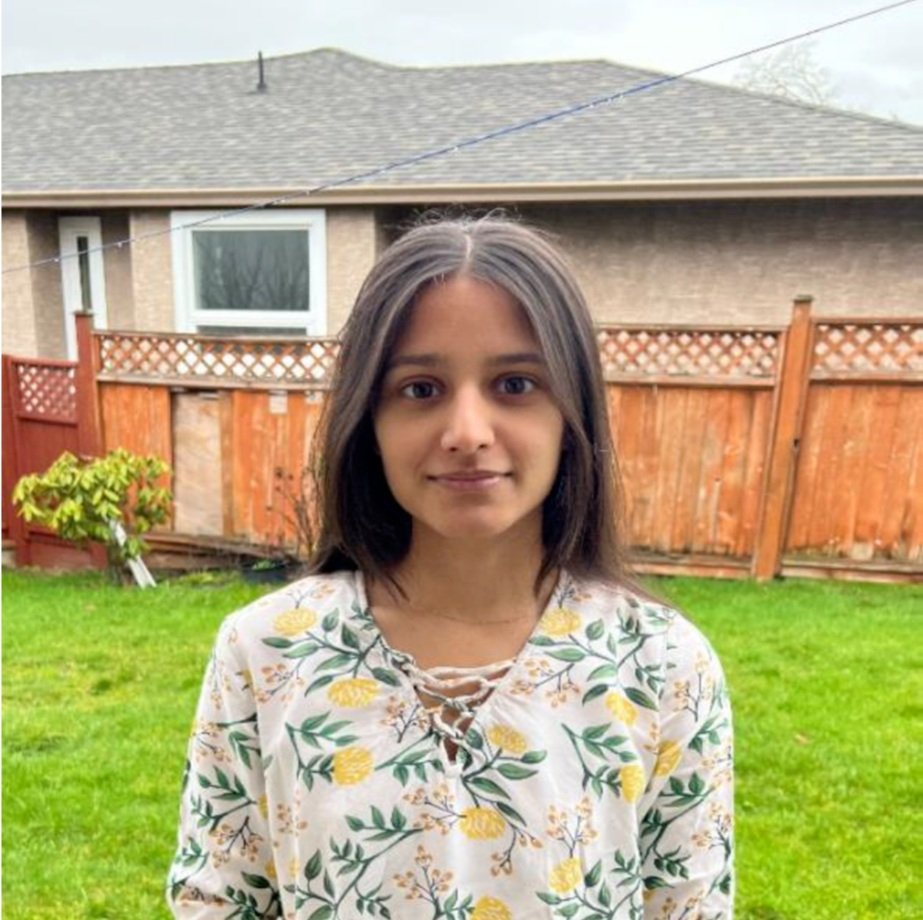
“We should listen carefully to the soft, faint voice in our inner mind. It advices one to move forward with a healthy mindset and to resist the temptation of misdeeds.” Vanshika Awasthi
#SILeadershipInAction #SIVictoriaWestshore #wcsoroptimist
Submitted by Jaynne Carr, SI Edmonton
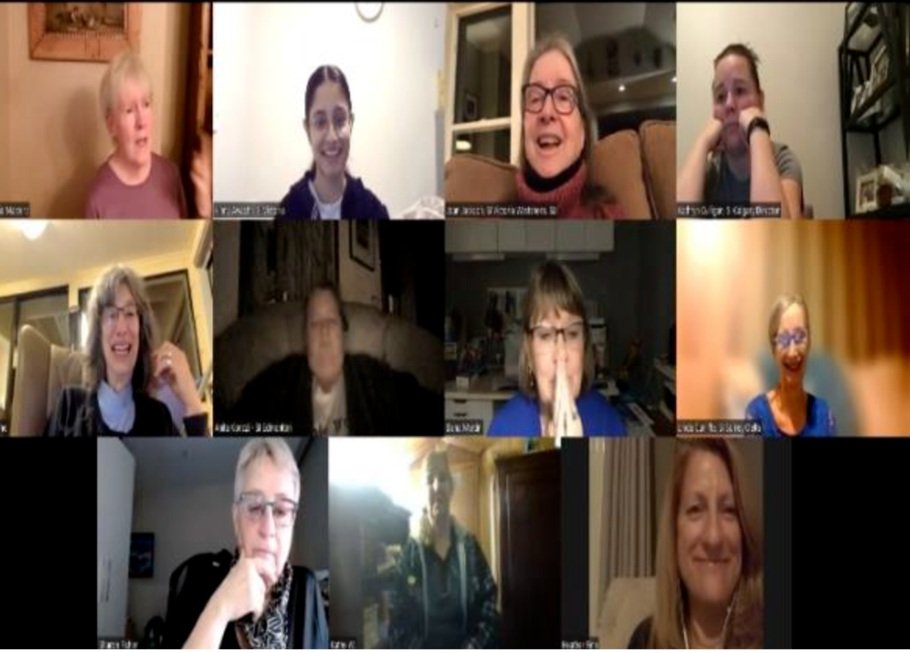
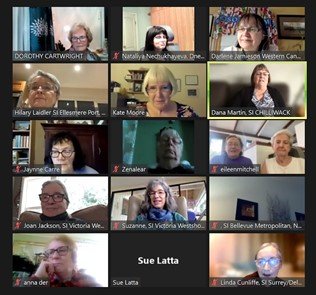
Many thanks to WCR Governor Suzanne, Friendship Chair Darlene Jamieson and Zoom host Colleen Penrowley for organizing such an awesome event. Hilary Laidler spoke about designing her beautiful President’s Appeal pins that have supported so many appeals and Kate Moore outlined the 25 year history and amazing stories of the Chatline.
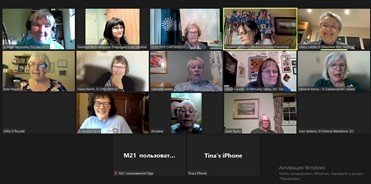
For SIEdmonton it was a delight that members of two of our friendship Link Clubs, SIDnepropetrovsk and SIBath were able to attend and share in this amazing inaugural event. President Nataliya from SIDnepropetrovsk sent us some of her screenshots (below) and shared a little about her club. Other club members were also on the zoom and together expressed their appreciation for being invited and the heartfelt supportive wishes coming their way.
#block-yui_3_17_2_1_1643728243767_12780 .sqs-gallery-block-grid .sqs-gallery-design-grid { margin-right: -20px; }
#block-yui_3_17_2_1_1643728243767_12780 .sqs-gallery-block-grid .sqs-gallery-design-grid-slide .margin-wrapper { margin-right: 20px; margin-bottom: 20px; }
We have been Friendship Link Clubs since 2015. A few years ago we enjoyed watching a Christmas concert performed at an orphanage that SIDnepropetrovsk supports in Eastern Ukraine as one of their projects. Diane Steel from SIBath was also very pleased to have attended these presentations and the event itself.
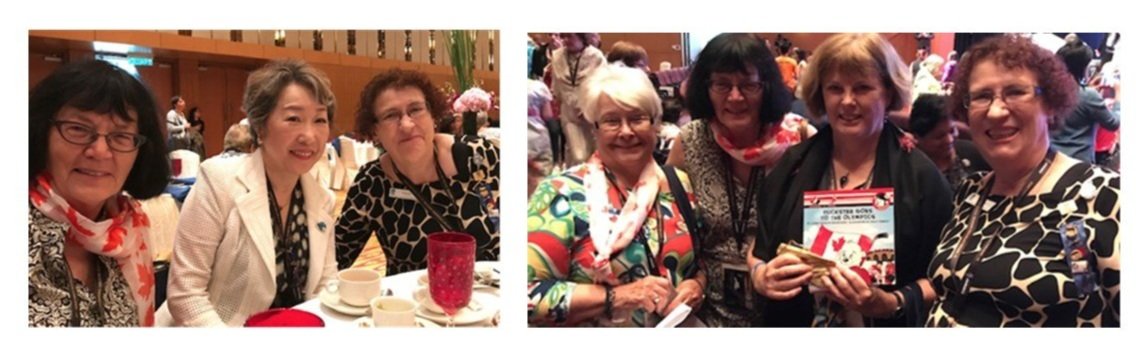
SIEdmonton is honoured to have several long standing formal and informal Friendship Links with Soroptimist clubs in all Five Federations. Over the years we have exchanged correspondence, program information and gifts. Wonderful opportunities to meet in person at Soroptimist Conferences and Conventions or arranged travel connections are the best!

Lunch with Michiko, SI Nayoro, Japan and our newest, SI Albany, Western Australia
SIEdmonton and SI Bath have been Friendship Link Clubs for over 30 years. Members of our two clubs have meet in person in San Francisco, Istanbul and Kuala Lumpur. One year two members from SIBath were on a cross Canada tour by train and we were delighted to be able to entertain them on their stopover in Edmonton for several days with a dinner in their honour, luncheons and side trips based on their hobbies of history and birdwatching.
We hope that once again our two clubs and our other Friendship Link Clubs (SI Nayoro, SI Albany, SI Saitama, SI Budapest, SI Tororo, and SI Dnepropetrovsk will be able to meet in person – next time in Dublin! And of course, our international Soroptimist friends the world over. Whatever it is, the way you tell your story online can make all the difference.
In the meantime, Zoom calls such as the one on Jan 29th, 2022 will connect us worldwide!
Terry-Lynn Stone ~ President, Days for Girls Canada

Terry-Lynn was a registered nurse in the UK and – after staying home to help raise four daughters – she moved to Canada, went to university and later became the Editor in Chief of Alive magazine.
She moved to Kamloops in 2009 and was the Executive Director of the Kamloops Brain Injury Association.
Terry-Lynn first heard about Days for Girls at a Rotary conference and says she “was livid that girls could suffer so much for something a) we took for granted, and b) is a natural part of being a woman.” In November 2016 she started the Kamloops Days for Girls team with $1000 in seed money from the Kamloops Rotary.
She is now serving her second term on the Days for Girls Board after joining in 2018. Terry-Lynn says: “I am lucky enough to have taken part in three [Days for Girls product] distributions and each one has really touched my heart.”
CARRINE CHAMBERS-SAINI – CEO & FOUNDER DIVA INTERNATIONAL INC.

CEO and Founder of Diva International, makers of the DivaCup, Carinne Chambers-Saini always knew that she wanted to follow in her mother’s footsteps, as both an entrepreneur and an advocate for women’s health. After graduating university, she joined forces with her mother to develop the DivaCup, a modern redesign of a concept from the 1930’s. They started Diva on a shoe-string budget from their kitchen table. Challenging a male-dominated industry, their product was often rejected as an unwanted threat to disposables.
Nineteen years later, DivaCup has taken menstrual cups mainstream and disrupted the industry. The DivaCup is now sold in over 40 countries.
Internationally, Diva has sold over 6.5million DivaCups to date. Carinne is a highly sought-after speaker and panelist, joining conversations all around the world on the state and future of the menstrual care industry. She has won multiple awards for her entrepreneurship and innovation, including EY’s Entrepreneur of the Year, RBC Canadian Women Entrepreneur Award’s Woman of Influence of 2019, and was named Canada’s Top 40 Under 40.
NIKKI HILL – PRINCIPLE, EARNSCLIFFE STRATEGY GROUP

Nikki Hill is the Co-Chair of the United Way Period Promise campaign and the recipient of the 2020 Greater Vancouver Board of Trade Wendy McDonald Community Catalyst Award. .
NICOLE WHITE – FOUNDER, MOON TIME SISTERS
Make it stand out
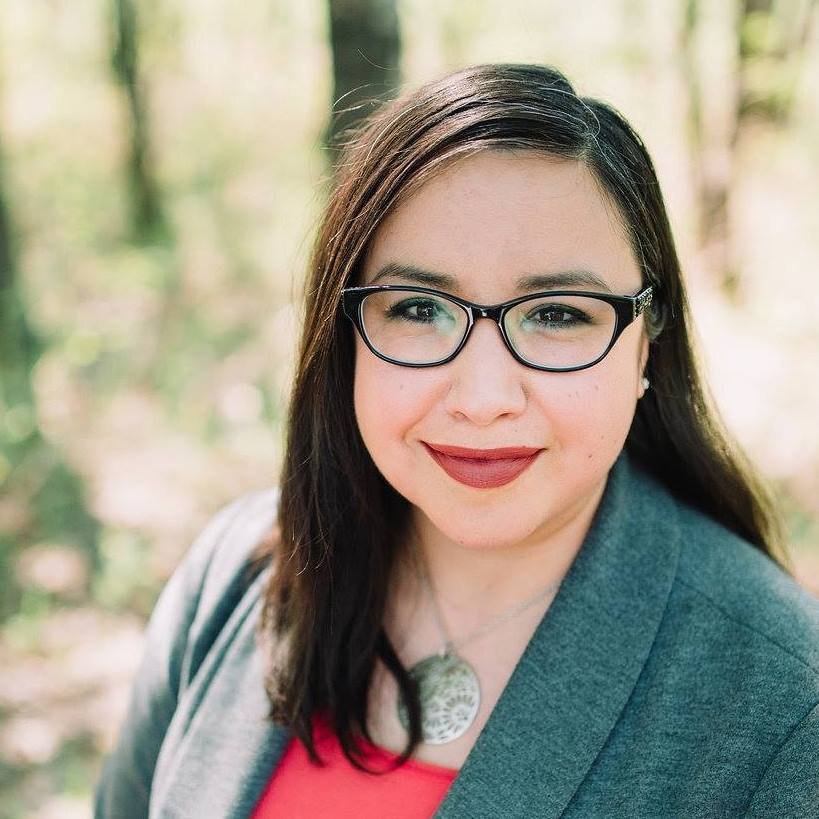
Nicole White (she/her) is the founder of Moon Time Sisters, an Indigenous led project aimed at supporting northern and remote communities in Canada. Since its inception in January 2017, they’ve expanded to have four provincial chapters that include Saskatchewan, Ontario, British Columbia, and Manitoba. By the end of 2021, we project having sent two million menstrual products up to First Nations communities.
Her paid work focuses on creating respectful, safe workplaces. Nicole is a registered social worker and has worked in community for nearly two decades and focused her professional work on gender-based issues and engaging marginalized populations.
Submitted by Melanie Kenny, SI Saskatoon
So many of us take the right to education for granted and so do our children – and thank goodness we can! But many people don’t have access to education. For the fourth year in a row, the UN has stepped forward to raise a crucial topic – the importance of learning – by marking the International Day of Education on January 24.
Some of us have had the opportunity to further the quality of our lives by taking advantage of educational opportunities. But, imagine for a moment, there was no opportunity to take advantage of. Then go on to imagine how diminished your life would be without education. No fabulous children’s stories as you’re growing up to spark your imagination, possibly no ability to read at all. How much we would have missed and would still be missing now. Education helps us grow and learn about a world outside of our own immediate and limited experience and how critical that is for our own lives and the lives of those around us so that the world can be improved. We learn, through education, the importance of listening to other people‘s ideas and points of view. We learn that maybe we’re not always right or perhaps we learn that we are right and should stick to our guns even if those around us don’t necessarily agree. Education gives us the confidence to improve and change the world for the better.
The UN states that it has ‘a vision of education that ensures, justice, human rights and opportunities… and will allow us to better respond to emerging challenges and better address the interests of future generations. In the UN’s future of education report, it states ‘the future requires an urgent rebalancing or our relationships with each other, with nature as well as with technology that permeates our lives, bearing breakthrough opportunities while raising serious concerns for equity, inclusion and democratic participation.
How can this urgent rebalancing take place unless the world’s youth are educated? We are beginning in our own backyards with Soroptimist members continuing the splendid work we are doing with our Dream It Be It program, encouraging young women to become educated who may not have that type of support at home. We are helping young women dream of building a more sustainable, inclusive and peaceful future as envisioned by the United Nations. Our Soroptimist Clubs are imperative, through our Dream It Be It program, to changing the course and transforming the education of the young women in our communities. Keep up the great work!
This is the second post about Soroptimist Western Canada Region’s upcoming virtual forum – Period Poverty and Public Policy – What Next?. – the fourth event in our Gender Equality Now series.
If you haven’t already checked out the first blog post, you can do so here.
Our region boasts a second FABULOUS change champion in the fight for menstrual equity. Let’s meet panelist, Sherri Smith.

Sherri Smith has been a Soroptimist since 1995 and a United Way volunteer since 1988. She is the current president of Soroptimist International (SI) of Central Alberta. Professionally, she is a Chartered Professional Accountant working in finance in the town of Innisfail.
At the beginning of 2021, SI Central Alberta received a grant from the Red Deer District Community Foundation and the Fund for Gender Equality.
The club partnered with the United Way of Central Alberta to create the Period Promise pilot project. Four schools in the Red Deer Public School District were outfitted with dispensers in EVERY washroom and stocked with free menstrual products for a 15-month pilot. Survey data is being gathered for future advocacy work.
Now a passionate menstrual equity and gender equality advocate, Sherri loves to learn and connect with other menstrual equity organizations across the country and the world. She also continues to educate others about period poverty and advocate for free access to menstrual products in all public spaces, including all schools.
1. What was the biggest obstacle you faced in getting free menstrual products in Central Alberta schools?
COVID 19!!!!!! We had tremendous help from United Way BC in setting up everything for the pilot, the resources, the contacts, the surveys, support, etc. We were very fortunate to receive the funding so that this pilot could proceed. Funding could be an obstacle for others who want to also do this pilot. We had cooperation from the school board and the support from the 4 schools to begin the pilot. This was still all happening during COVID in 2021.
When the dispensers and products arrived and were ready to be picked up by school staff to have them installed there was school shutdowns and going to online learning. Finally, they were installed with only 2 months remaining in the school year. The following school year still has the pilot operational until the end of the school year, but every lockdown causes students to not have access to products they may need.
2. What in your opinion was the deciding factor in getting it passed?
Don’t know how to answer this one, as we couldn’t prevent COVID from happening and just had to have patience that the students would eventually be helped.
3. What can private citizens and volunteer organizations like Soroptimist do to encourage policymakers to adopt similar resolutions across the country?
Talk about period poverty as much as you can, where you can. At meetings, groups, with councillors, school boards, etc. Participate and support donation drives and organizations helping to end period poverty. Walk the talk. And also hold people accountable, such as politicians. When you read that a period poverty initiative is happening, follow up later to make sure they are doing it. Keep checking back that they are actually doing what they said they would.
4. Do you have any other advice for menstrual equity advocates who are trying to make a difference in their communities?
I would recommend educating yourself and finding ways to collaborate. Education, such as reading, scouring the internet, social media pages, etc. Attend webinars and forums put on by other organizations. With more knowledge you are able to speak to the issue with those who don’t know. Collaborate with other advocates in your town or city – more voices = more power. Find out first what is needed in your community, don’t assume you know what is needed. It is best to check with organizations, etc. who deal with period poverty every day.
Thanks so much Sherri! We are really looking forward to hearing you and the other panelists at Period Poverty and Public Policy – What Next? on February 5th from 1 to 4 PM PST.
Soroptimist International Western Canada Region is getting ready to host our fourth Gender Equality Now forum (GEN 4) on Saturday February 5th, 2022 from 1 to 4 pm PST. The theme of GEN 4 is Period Poverty and Public Policy – What Next? At this virtual forum we will be screening the film Pandora’s Box (courtesy of Diva International), with a Q&A featuring executive producer of the film and CEO of Diva International, Carinne Chambers-Saini. In addition, we will be hosting a panel discussion featuring some of the top change champions in the fight for menstrual equity, and running breakout sessions for discussion. It’s a jam-packed event that anyone interested in menstrual equity should attend.
Tickets for this virtual event are available through Eventbrite
What is Period Poverty?
Period poverty refers to a lack of access to menstrual products, sanitation facilities and adequate education about reproductive health and menstruation. People who experience period poverty are unable to purchase menstrual products, preventing them from going to school, work, or participating in daily life. When menstrual products and information are unaffordable or unavailable, barriers to education, civic engagement and therefore gender equity are created. Period poverty is a significant issue for an estimated 500 million people worldwide, and it occurs everywhere. In fact, period poverty exists here in Canada and Soroptimists are part of a growing movement to address it.
Meet Menstrual Equity Change Champion Nancy McCurrach
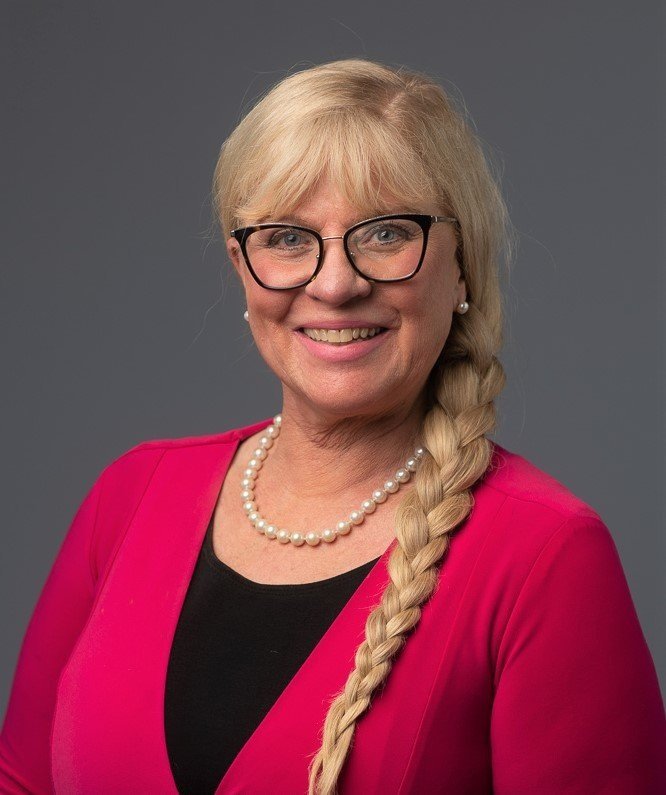
Nancy has been a Soroptimist since 2014 and a Port Coquitlam City Councillor since 2018.
This past December, Nancy was named as the 2021 United Way Labour Appreciation Award recipient for her work with gender equity; specifically, being the driving force on Port Coquitlam City Council behind providing free menstrual products in civic facilities. She has been an inspiring advocate for policy change and reducing the stigma around menstrual products.
1. What was the biggest obstacle you faced in getting your resolution passed by Port Coquitlam City Council?
There were several obstacles that stood in the way for approving free menstrual products in civic facilities. One objection that I heard was that taxpayers would be responsible for the extra cost for menstrual products in facilities (just like toilet paper, soap, paper towel etc. that are already provided). In my situation I found that it was a couple of the men on council that wanted to sway the minds of other council members during the lively debate by saying they were all for menstrual equity, yet they believed proper process wasn’t followed, and that as a city we needed to not burden the taxpayers with downloading this expense onto them. During another Council meeting, one of the male Councillors had concerns about people taking more than one product. (?) It felt like two vocal males were trying to influence others by making it more about process than gender equity.
2. What in your opinion was the deciding factor in getting it passed?
It was thanks to Port Coquitlam Mayor Brad West, his progressive values, and our strong working relationship, that the motion got passed. During the discussion on process, he said that when a council member is as passionate about an issue such as I was about this one that he supports the council member. The mayor’s encouraging words swayed the holdouts and the motion passed – with the vote being five in favour two opposed. This motion was the one to be brought forth to the UBCM (Union of British Columbia Municipalities) convention. The aim was to put the associated cost out of the municipal purse into the provincial budget. I encourage everyone to consider sharing this motion Dr Selina Tribe created that I brought forth to the Province of BC with other Provinces to adopt (that have not something similar in place) in their respective provinces.
3. What can private citizens and volunteer organizations like Soroptimist do to encourage policymakers to adopt similar resolutions across the country?
I would encourage Soroptimist clubs and other volunteer organizations across Canada to unite and know that they don’t need to recreate the wheel, as one is already in motion.
There is a big way you can help:
Two significant resolutions that I created along with Dr. Selina Tribe: 1) Addressing Period Poverty in Canada, and 2) Updating Restroom Regulations have recently been adopted by the Federation of Canadian Municipalities as of September 2021, and both are significant steps. More needs to be done to have them enacted. The Honourable Marci Ien PC MP (Minister for Women and Gender Equity in the House of Commons) – has asked in her letter that is now with the House of Commons in Ottawa for action on both and a clear national approach rather than a patchwork solution.
Please consider reaching out to provincial gender equity Ministers and the Federal gender equity Minister and write letters of support for the Period Poverty Plan and changing the Building and Updating Restrooms the Soroptimists Canada can consider to also endorse and resubmit to the Minister of Women and Gender Equity.
Other actions you can take are:
o Consider joining on to already adopted motions like those from Port Coquitlam city council.
o Advocating at City Council meetings and attending as delegations to request cities implement free menstrual dispensers and products in their civic washrooms: At least 50% of the population that votes are women or other people who menstruate.
o Advocate for a period poverty plan as well as a changing the building and Health and Safety Codes both Provincially and Federally.
o Reach out to City Councils and call each councillor before a vote to advocate for free products in civic facilities.
o Reach out to other organizations to amplify the message (e.g., Girl Guides Canada).
4. Do you have any other advice for menstrual equity advocates who are trying to make a difference in their communities?
Host Period Product Drives at work or within the community to take away the sigma of periods: Reach out to other organizations and unite with an asset management lead (such as the United Way of the Lower Mainland – as they already have tons of data on record).
Host letter writing campaigns and send requests to support both resolutions on 1) Addressing Period Poverty in Canada, and 2) Updating Restroom Regulations to.
Ministry of Labour (who administer the provincial OHS regulations)
Minster of Gender Equity (who administer the Provincial regulations
Federal Ministry of Labor (who administer the federal OHS regulations)
The Federal Minister for Women and Gender Equity (currently the
Honourable Marci Ien (PC MP )
AND the
National Research Council (who administer and revise the Canada Building Code). This letter should reference code change request “CCR 1441” can be cc’d to Brigitte Potvin, Technical Advisor, Codes Canada, National Research Council Canada / Government of Canada. Email is codes@nrc-cnrc.gc.ca
Thanks Nancy! We can’t wait to hear more insights from you and our other change champions on February 5th at Period Poverty and Public Policy – What Next?
Stay tuned for our next blog post featuring Soroptimist and menstrual equity change champion Sherry Smith!


 Soroptimist International Western Canada Region